 WhatsApp




Industry information
Trimethylolpropane (TMP): Versatile Applications in Coatings, Resins and Lubricants
2026.10.10
Read More


) is a high-purity product obtained by oxidizing p-xylene (PX) and then hydrogenation refining —aromatic dicarboxylic acid, with molecular formula . It is the well-deserved "throat" raw material of polyester (PET) — over 90% of global polyester uses PTA as a monomer; behind every polyester garment, beverage bottle, and roll of packaging film stands PTA. HOOC − C₆H₄ − COOHC₈H₆O₄ (Terephthalic acid: a carboxyl group −COOH at each end of the para-position of the benzene ring, i.e., "1,4-benzenedicarboxylic acid")
| Indicator | Value / Description |
|---|---|
| Molecular Formula | White crystals or powder, odorless or slightly acidic |
| CAS No. | Melting Point / Decomposition |
| Appearance | Approx. 300 °C (does not melt but sublimes/decomposes upon heating) |
| Relative Density | Approx. 1.51 g/cm³ (20°C) |
| Soluble in alkaline solution, slightly soluble in hot water, difficult to dissolve in common organic solvents | Theoretical Acid Value |
| Solubility | Approx. 675 mg KOH/g |
| 1.2 Why It Is the "Throat" of the Polyester Industry Chain | PTA connects upstream to the aromatic feedstock PX and downstream to polyester (PET); it is |
. China's PTA self-sufficiency rate is nearly 100% and import dependence ≈0; domestic PTA directly feeds downstream polyester, bottle chip, and film capacity. It can be said that without PTA, there would be no modern fiber and packaging industry — which is exactly its irreplaceable underlying logic.2.1 Mainstream Process: PX Oxidation + Hydrogenation Refining (Amoco Process)Almost all global PTA uses the two-stage method (Amoco / purified terephthalic acid process):
. The process is mature with extremely strong scale effects; a single unit has entered the 2.5-million-tonne-per-year class.: 1 tonne of PTA consumes approx. 0.66 tonnes of PX
, withcobalt acetate / manganese acetate (main catalyst) + bromide (promoter), oxidizing PX with air under high temperature and pressure; the refining stage usespalladium/carbon (Pd/C) catalyst + hydrogen to hydrogenate and remove impurities in CTA (mainly 4-CBA), yielding high-purity PTA. The acetic acid price and unit energy consumption are the most important cost variables besides PX.2.3 Technology Iteration: Continuous Cost Reduction via Unit Scale-upSince 2019, new units have generally adopted next-generation technologies such as BP and INVISTA, with single-unit scale ≥2.5 million tonnes; energy, material, and investment intensity have dropped sharply vs. earlier units. The difference in processing fees across generations is significant, and the low-cost advantage of new units is accelerating the phase-out of old capacity:
Typical Processing Fee (yuan/tonne)
| First generation | Approx. 840 | Features |
|---|---|---|
| Early small units, high cost | Second generation | Approx. 650 |
| Gradual scale-up | Third generation | Approx. 400 |
| Significant drop in energy and material consumption | Fourth generation | Approx. 275 |
| New-generation large units, lowest cost | Note: The generation-wise processing fee data are compiled from Debon Securities and SCI99 industry estimates; actual figures vary significantly by company integration level. | III. Downstream Applications: Polyester (Polyester / Bottle Chip / Film), etc. |
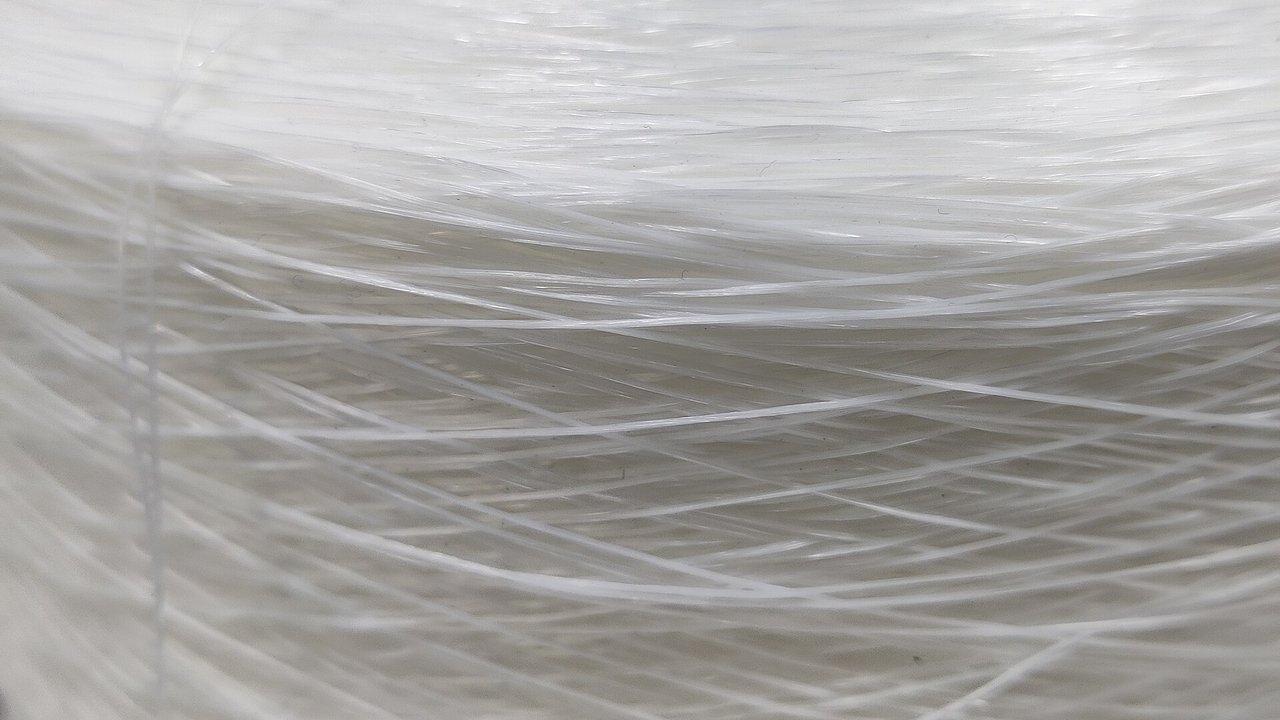
undergo esterification and polycondensation to form PET, which is then spun intopolyester filament / staple fiber, widely used in clothing, home textiles, decorative fabrics, and industrial yarn (tire cord, conveyor belts, filter materials). Polyester is absolutely the largest outlet for PTA.3.2 Polyester Bottle Chip (PET bottle grade) — the Packaging MainstayBottle-grade PET is the core raw material for soft-drink bottles, edible-oil bottles, and hot-fill bottles. With the expansion of scenarios such as takeout and fresh-cold-chain,
, and food-grade PET exports continue to expand, serving as an important stabilizer for PTA demand.3.3 Polyester Film (Film-grade PET)Film-grade PET is used for packaging film, electrical insulation film, and photovoltaic backsheet film, etc.; its added value is relatively high, making it an important direction for differentiated polyester.
: approx. 4% of PTA consumption, used in unsaturated polyester resin, insulating varnish, etc.
| Application Field | Polyester Fiber (Polyester) | ~75%–80% |
|---|---|---|
| Textile & apparel / Home textiles / Industrial yarn | Polyester Bottle Chip | ~22% |
| Beverages / Edible oil / Hot-fill packaging | Polyester Film | ~4%–5% |
| Packaging / Electronics / Photovoltaics | Engineering Plastics / Other | ~4% |
| Unsaturated polyester / Powder coatings | Demand Structure Note | : PTA's downstream is highly concentrated in |
, doubling from 2019 (46.69 million tonnes); approx. 8.70 million tonnes of new capacity was added in 2025 (Honggang 2.50M, Sanfangxiang 3.20M, Dushan Energy 3.00M, etc.). Worth noting: domestic PTA will see zero new capacity for the whole year of 2026
— the first time since 2019, marking the official end of seven consecutive years of rapid capacity expansion.Yisheng Petrochemical 21.50 million t/y (world's largest, approx. 23%), Hengli Petrochemical 16.60 million t (approx. 18%), Xinfengming 11.00 million t, Tongkun 10.20 million t etc.; the industry CR5 is approx. 70% and CR7 approx. 76%; small and medium units, under a processing-fee environment below 200 yuan/tonne, are forced into "three days on, two days off" operation, accelerating phase-out.
Market leadership is highly concentrated: : Nominal capacity remains high, but low processing fees force units to proactively cut load/maintenance; the 2025 average operating rate was approx. 78%, and 2026Q2 once fell to 58.2% (a near-decade low), showing the typical shakeout-phase features of "overcapacity + low operating rate + rising leader market share."4.2 Complete Price Chain: Upstream Raw Material → PTA → Downstream
| Item | East China Mainstream | 2025 Year-end Average | Data Source / Date |
|---|---|---|---|
| 5,079 (up 6.04% vs. early year) | SunSirs 2025-12-31 | 2026-07-21 Close | 5,925 (−124) |
| SCI99 Morning Note 07-22 | Stage High | 2026H1 Spot High | |
| 7,039 (highest since June 2022) | SCI99 Semi-annual Review 2026 | 1Q26 Average | 5,634 (YoY +13.70%) |
| Wind / Hengli Disclosure 2026Q1 | Enterprise Annual Average | Hengli 2025 PTA Annual Average Price | |
| 4,200.97 (YoY −15.67%) | Hengli Petrochemical 2025 Annual Report | Upstream: PX | 7,895 (YoY +14.03%) |
| Processing Fee | Wind / Hengli Disclosure 2026Q1 | 2026-07-22 Daily | Hengli 2025 PTA Annual Average Price |
| 440 | Note: The above are data from public quotation platforms and manufacturer disclosures; actual transaction prices fluctuate due to payment terms, freight, and purchase volume; updated on 2026-07-29. | ① Upstream: Strong PX Support + Geopolitical Disturbance | 2026H1 Spot High |
② Midstream: Processing Fees Recover from the Abyss
In 2025, the PTA-PX spread was suppressed for a long time; the October average processing fee was only 154 yuan/tonne, with four consecutive months of theoretical loss; entering 2026, with zero new capacity and concentrated maintenance, the spot processing fee recovered to the 250–400 yuan/tonne range, and industry profits turned positive across the board.
: Institutions generally point out that PTA shows "
strong cost support vs. weak demand
cost-driven oscillation
range, with prices more volatile following crude oil/PX; suitable for phased price-locking rather than chasing highs
| East China Mainstream Price (yuan/tonne) | Trend | 2024-05 | Year high |
|---|---|---|---|
| Around 4,300 | ↓ Year low | 2025-06 | ↓ Maintenance + restocking rebound |
| 5,200+ | ↑ Rebound | Year-end rally | ↑ 5,079 (average) |
| ↓ Low level | ↑ Year-end strengthening | 2026-03 | ↑ Geopolitical conflict pushed up oil prices; spot high |
| 7,039 | 2026-07 | Pulled back from highs, oscillating | ⚠ Year low |
| 5,925–6,025 | — Pulling back and oscillating | End of Expansion | Zero new additions for all of 2026; the seven-year expansion cycle ends, and the supply-demand inflection point approaches |
| Impact | Sustained Demand Growth | Driven by rising polyester bottle flake output; expanding applications in pharmaceuticals/electronic chemicals |
|---|---|---|
| Easing supply pressure | Anti-involution + Phase-out | Old capacity (below 1.5 million tonnes) exits, concentration rises (CR5→70%+) |
| Pattern Optimization | Processing Fee Recovery | Recovering from the 154-yuan trough to 250–400 yuan; profits bottom out and rebound |
| Profit Improvement | Integrated Leaders | "Crude oil—PX—PTA—Polyester" integration, with outstanding cost and risk-resistance advantages |
| Leaders Benefit | Stable Demand Growth + Exports | Polyester/textile/bottle chip grow steadily; India recovery + Southeast Asia layout improve exports |
| Demand Support | Crude oil/PX cost disturbance + demand seasonality | affects oscillation; in the medium to long term, it will follow the four main lines of " |
• High-purity PTA (multiple domestic leader brands available; fiber grade / bottle grade complete)
• Supporting supply of polyester (polyester / bottle chip / film) raw materials
📌 , or add our WeCom (enterprise WeChat), and the Haiyu Zhonglong Chemical team will provide you with: • High-purity isophthalic acid (multiple domestic brands available, bottle-flake grade / resin grade) • Supporting supply of polyester bottle flake / unsaturated resin raw materials
[1] CCF (China Chemical Information) / Chemical Fiber Information Network. 2025 PTA Capacity and Supply-Demand Pattern [EB/OL]. 2025-11/12.
[2] SunSirs. 2025 PTA Price "W"-shaped Fluctuation — How Will 2026 Play Out? [EB/OL]. 2026-01-06.
[1] Huanjing Industry Research Institute. 2025 China Isophthalic Acid Industry Development Status and Outlook [EB/OL].
📚 [2] Zhiyan Consulting. 2025 China Isophthalic Acid Industry Status and Development Trend Analysis [EB/OL].
[3] SCI99. PTA Semi-annual Review: H1 Hits Four-Year High, Second Half Follows Crude Oil Down [EB/OL]. 2026.
[4] Hengli Petrochemical 2025 Annual Report; Tencent Finance. Integration Advantages Emerge, PTA Industry Pattern Optimizes [EB/OL]. 2026-05.
[5] Open Source Securities. PTA Industry Expansion Nearing End, Demand Growing Steadily [EB/OL]. 2025-08-15.
[6] Huatai Securities. Expansion Cycle Ends, PTA Industry Inflection Point Emerges [EB/OL]. 2025-09-25.
[7] Debon Securities. PTA Anti-involution Imminent, Industry Inflection Point Approaching [EB/OL]. 2025-09-29.
[8] Xueqiu. Aromatic Chain (PX-PTA-Polyester): Profit Redistribution After Massive Capacity Expansion [EB/OL]. 2026.
[9] China Chemical Information Weekly. Operating Rate Falls Below 80%! How Much Room Is Left for PTA Anti-involution? [EB/OL]. 2025-12-04.
Why Polycarbonate / Epoxy Resin Can't Do Without Bisphenol A (BPA)? From Molecular Structure to the Industry Chain
Column: Technical Primer / Industry Watch | Featured Product: Bisphenol A (Bisphenol A, BPA) | Downstream: Polycarbonate PC / Epoxy Resin EP / Polysulfone, etc.
Column: Technical Primer / Industry Watch | Featured Product: Purified Terephthalic Acid (Purified Terephthalic Acid, PTA) | Downstream: Polyester Fiber (Polyester) / Bottle Chip / Film
NEWS


Platform Information Submission - Privacy Agreement
· Privacy Policy