 WhatsApp




Industry information
Chemical Raw Material Procurement Pitfalls: 6 Key Points on Choosing Suppliers and Controlling Quality
2026.10.10
Read More

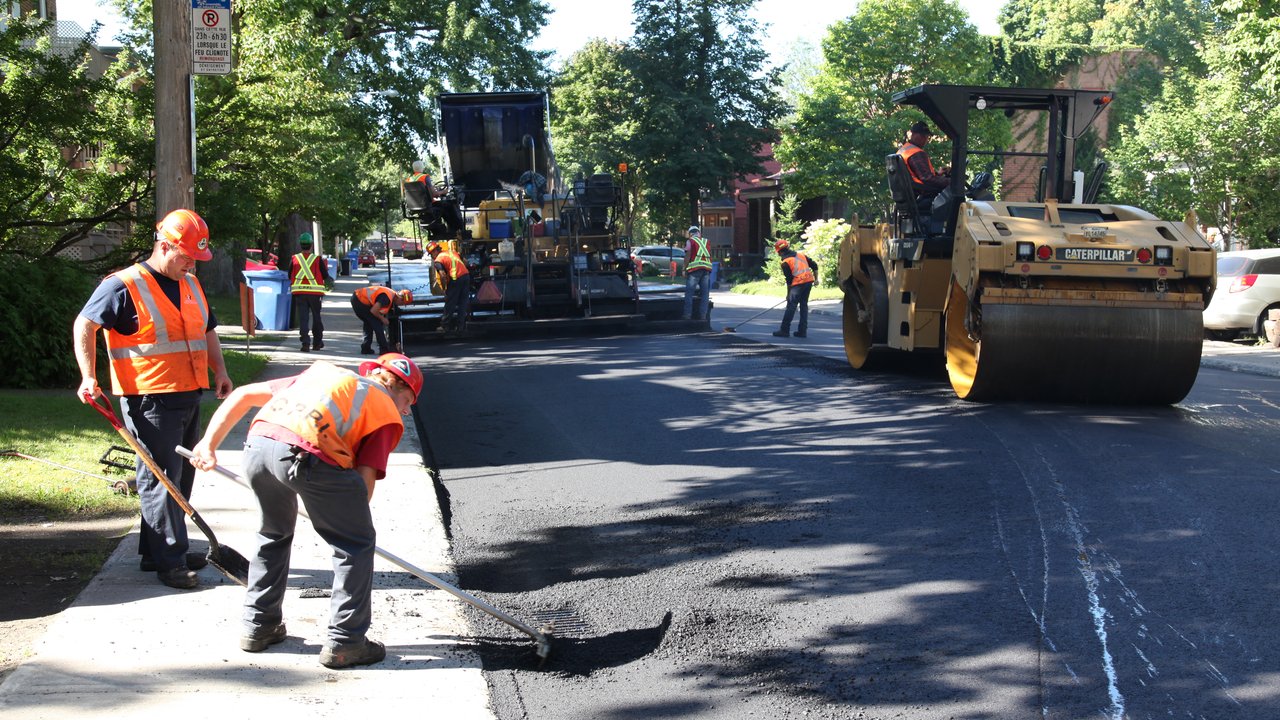
For road agencies, roofing manufacturers, and bitumen blenders across Vietnam, Thailand, and the wider region, polymer-modified bitumen (PMB) is now the default for roads that must survive intense heat, heavy monsoon rainfall, and heavy traffic. The polymer of choice is almost always SBS (styrene-butadiene-styrene). It is inexpensive relative to its performance, and it transforms ordinary bitumen into an elastic, fatigue-resistant binder. This guide explains how SBS modifies asphalt, which grades fit, how much to add, and what to check before you buy.
Plain bitumen is a thermoplastic — it softens in summer heat and becomes brittle in the cold. SBS-modified asphalt is produced by blending a few percent of SBS into hot bitumen (typically 170–190°C) under high shear. The SBS molecules swell in the aromatic oil fraction of the bitumen and form a continuous, elastomeric network. The result is a binder that behaves like a cross-linked rubber at service temperatures yet can still be pumped and laid like conventional asphalt.
Because the network is physical-and-chemically stabilized rather than fully vulcanized, SBS-modified bitumen stays processable — the single biggest reason it dominates the PMB market worldwide.
In tropical and subtropical climates, the performance gap between unmodified and SBS-modified asphalt is large and visible. The key benefits:
| Benefit | What it means in the field |
|---|---|
| Rutting resistance | Holds its shape under heavy loads and high pavement temperatures |
| Low-temperature cracking resistance | Absorbs thermal stress during cool nights and cold snaps |
| Elastic recovery & fatigue life | Recovers after deformation; longer service life under traffic |
| Water & ageing resistance | Better cohesion reduces stripping and oxidative hardening |
| Roofing flexibility | In SBS-modified bitumen roofing sheets, stays flexible at low temperature |
"SBS" is a family, not a single product. For asphalt, the grade is chosen along a few dimensions:
| Dimension | Options | Typical fit for asphalt |
|---|---|---|
| Architecture | Linear vs. radial (star) | Linear: easier to disperse, widely used; radial: higher elasticity/recovery for demanding PMB |
| Styrene content | Typically ~30–40% | Higher styrene → firmer, more rut-resistant; lower → softer, more flexible |
| Oil extension | Unoiled vs. oil-extended | Oil-extended grades wet into bitumen more readily and lower cost per unit |
| Form | Porous crumb, powder, pellets | Crumb/powder disperse faster in bitumen than dense pellets |
Dosage is expressed as percent SBS by weight of the total binder. Typical starting points:
| Parameter | Typical range / note |
|---|---|
| SBS dosage | ~3–8% of binder; common road PMB ≈ 4–6%; high-performance up to 7–8% |
| Cross-linking / stabilizer | A small sulfur or sulfur-donor dose stabilizes the network and prevents phase separation |
| Blending temperature | Usually 170–190°C with high-shear mixing until fully swollen/dispersed |
| Compatibility aids | Some formulators add extender oil or a peptizer to improve dispersion and storage stability |
Yes — this is exactly where it earns its cost. Strong rutting resistance at high pavement temperatures plus elastic recovery against monsoon-related thermal cycling makes SBS-PMB the standard choice across Southeast Asia.
SBS gives an elastomeric (rubber-like) binder with excellent low-temperature flexibility; APP gives a plastomeric binder with good heat resistance but less flexibility. For roofing and pavements needing cold-flexibility, SBS is usually preferred.
Small trial quantities for sampling are usually available. Production volumes are quoted per tonne or per container; typical SME purchases fall in the 1–200 tonne range per order.
Column: Industry Information | Product: SBS for Asphalt Modification | Related: SBS & elastomers, SEBS / SIS / SEPS thermoplastic elastomers
NEWS


Platform Information Submission - Privacy Agreement
· Privacy Policy